Best 12-Inch BMX Bikes: Fit, Weight, and First-Pedal Picks
A 12-inch BMX is a first-pedal bike for a very small rider, not a miniature adult freestyle bike. The right choice is the one the child can start, steer, slow, and pick up without fighting the machine. Model years, colors, stock, and components change, so this is an evergreen size-and-use guide rather than a claim about a future 2027 lineup. Check the manufacturer or merchant page before buying.
Start with fit, not the badge
Wheel size gives you a starting point, but it does not determine fit by itself. Measure the rider's inseam and compare it with the bike's published seat-height range. The child should be able to sit with a controlled foot dab and should not have to stretch to reach the bars or brake. A bike that is too large can make a beginner look uncoordinated when the real problem is reach and leverage.
For a 12-inch BMX, compare:
- Seat height: enough adjustment for a safe first pedal and a little growth, without raising the saddle so high that the child cannot get a foot down.
- Top-tube length: shorter is not automatically better, but a compact cockpit is easier for a small rider to steer.
- Crank length: short cranks suit short legs and reduce pedal strikes.
- Brake reach: a hand lever must fit the child's fingers. A coaster brake can be simpler for some learners, but the child must understand how back-pedaling stops the bike.
- Complete-bike weight: a heavy bike is difficult to restart after a wobble or lift over a curb.
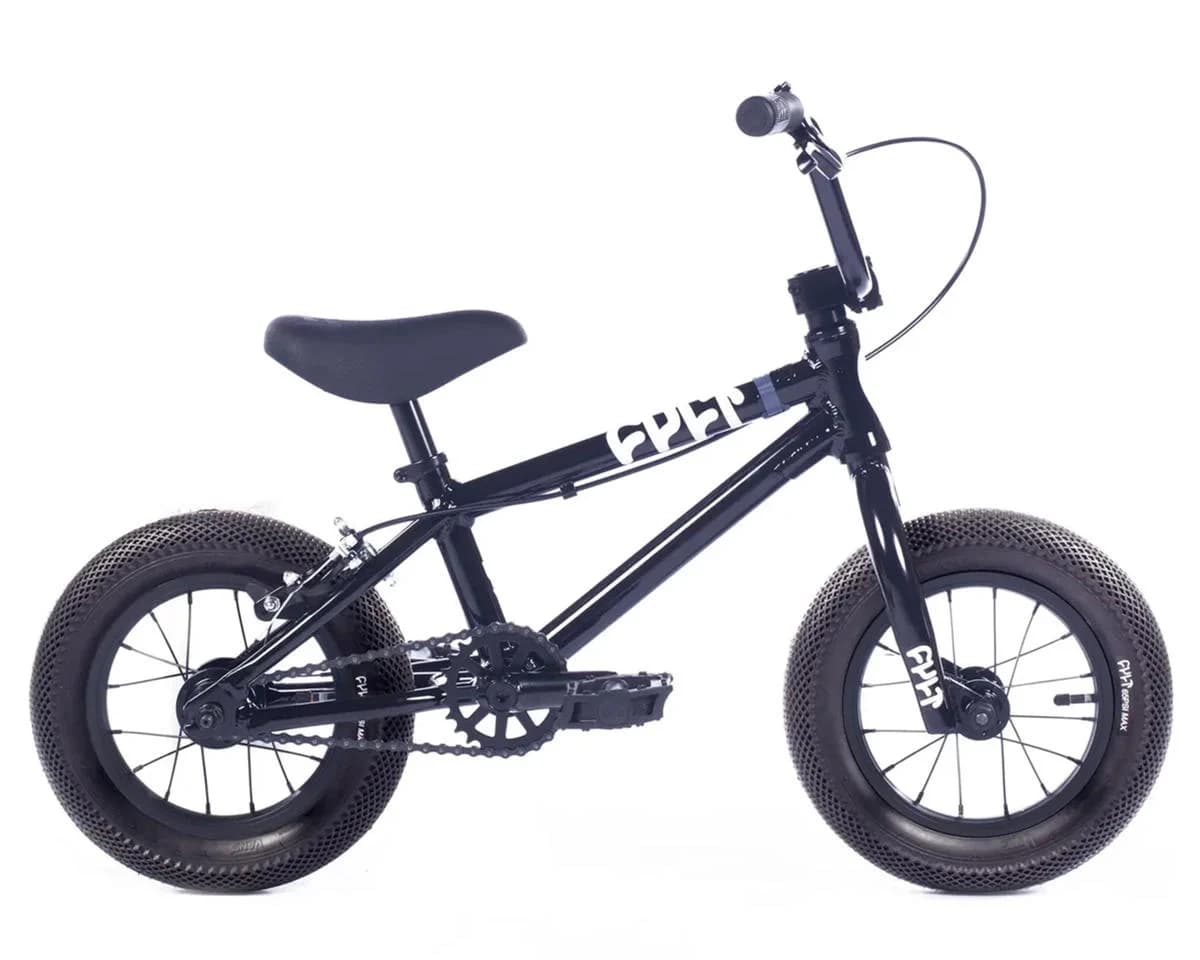
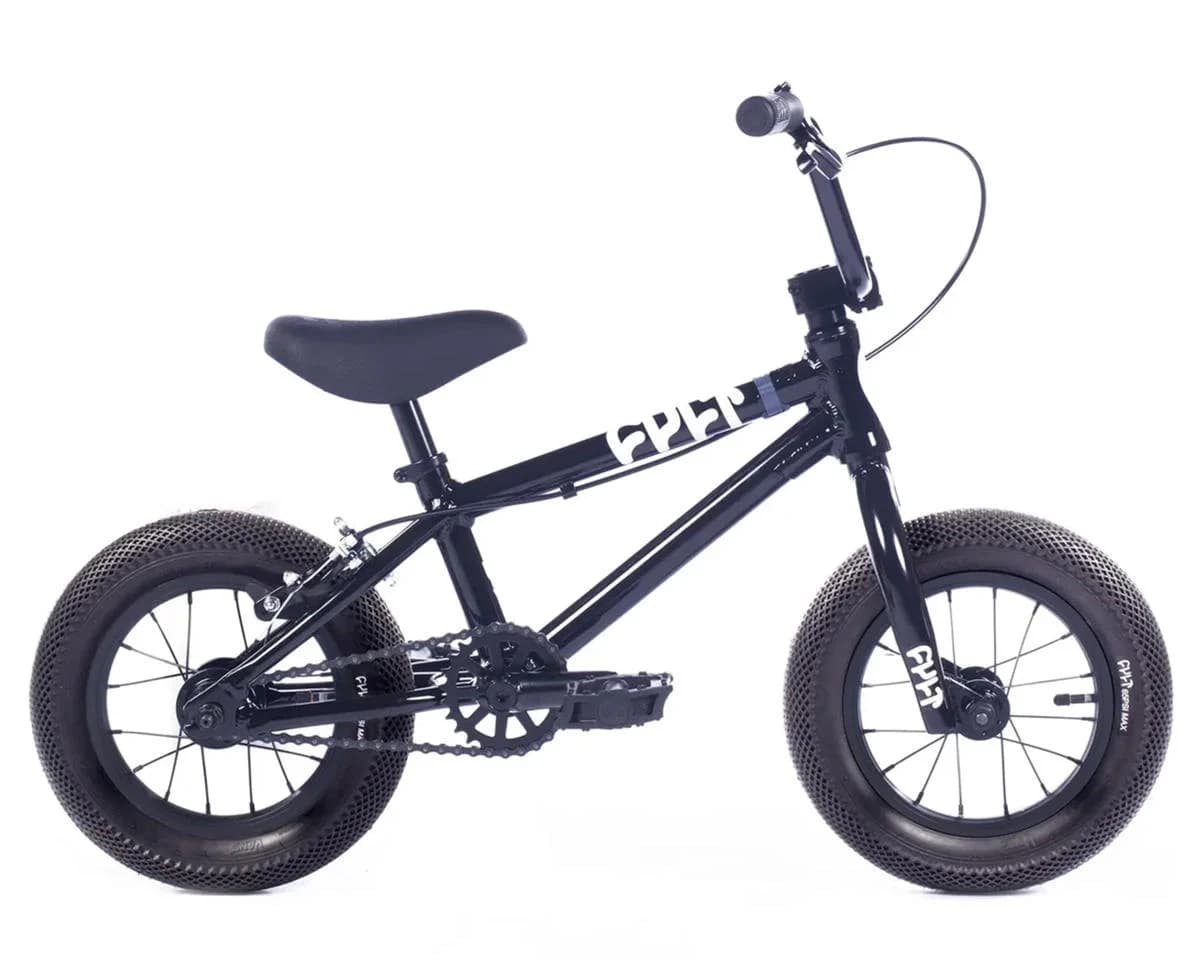
Cult Juvenile 12: the light, BMX-shaped pedal option
Cult's official Juvenile 12 listing identifies a 6061 aluminum frame, 13.25-inch top tube, 92 mm three-piece cranks, sealed mid bottom bracket, 9T cassette hub, 2.125-inch Cult x Vans tire, caliper hand brake, and a listed 14 lb weight. Treat those as the manufacturer's published details for the page checked, not as a permanent promise about every color or later revision.
The practical advantage is weight. A lighter complete is easier for a child to lift, correct, and carry, which can make practice less frustrating. The tradeoff is price and the need to teach a small rider how to use a hand brake. Measure the child's hand reach rather than assuming the lever is usable because it is installed.
Browse the current Cult Juvenile listing
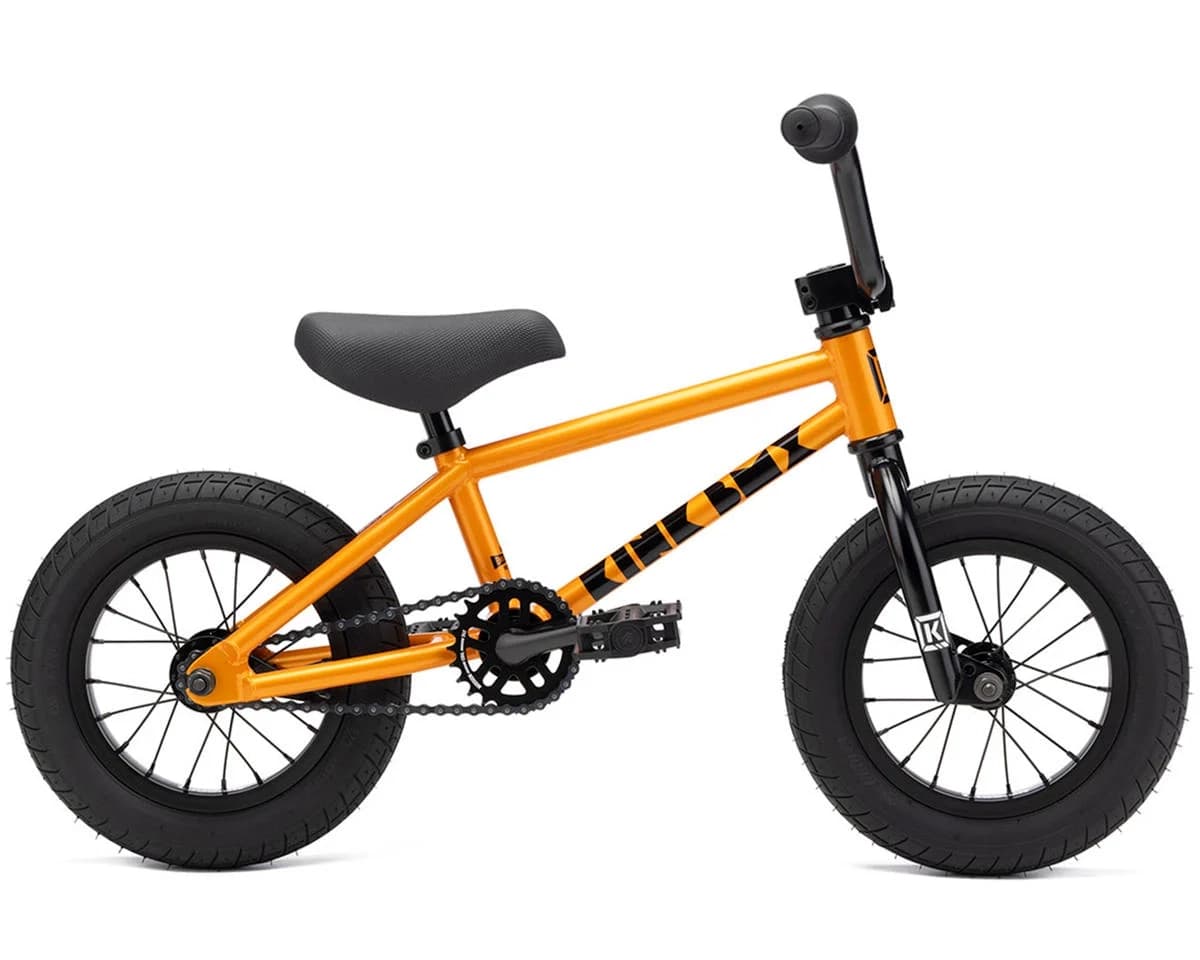
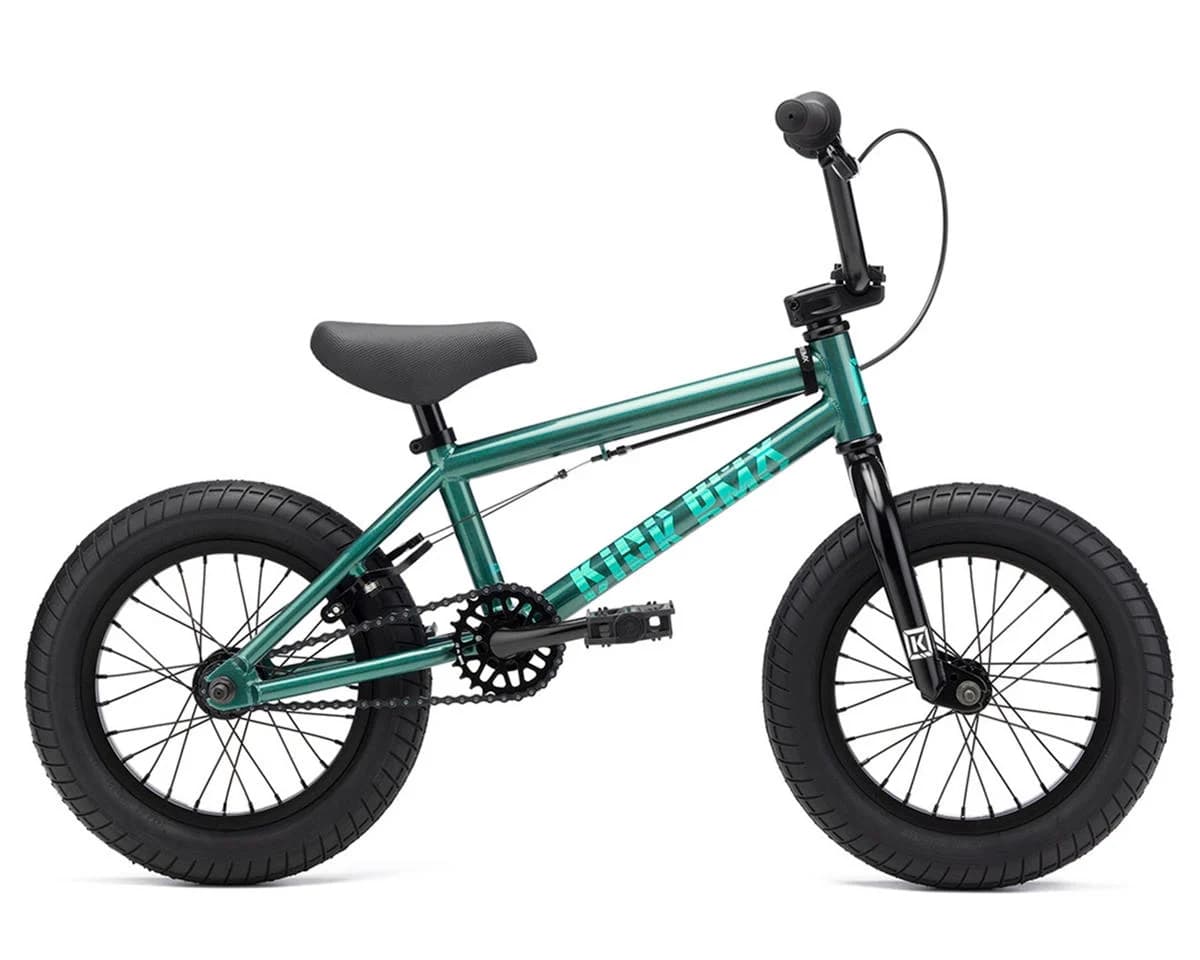
Kink Roaster 12: the simple first-pedal alternative
The Kink Roaster 12 product page describes a 12.5-inch top tube, 9.25-inch chainstay, 74-degree head angle, adjustable 15.5–18.5-inch seat height, coaster brake, 92 mm one-piece cranks, 12 x 2.25-inch tires, and a listed 16 lb 12 oz weight. Kink also says it is designed for children ages four and up. Use the live page and the child’s ability as the final check.
The Roaster makes sense when a coaster brake and steel construction are more useful than minimum weight. A coaster brake removes the small-hand lever question, but it is not universal: some children find back-pedaling natural, while others prefer a hand lever. Practice stopping in a quiet area before a first park visit. The steel frame and heavier complete are reasonable tradeoffs for families who want a straightforward neighborhood bike, not a lightweight trick machine.
Browse the current Kink Roaster listing
Other real options, and what they are for
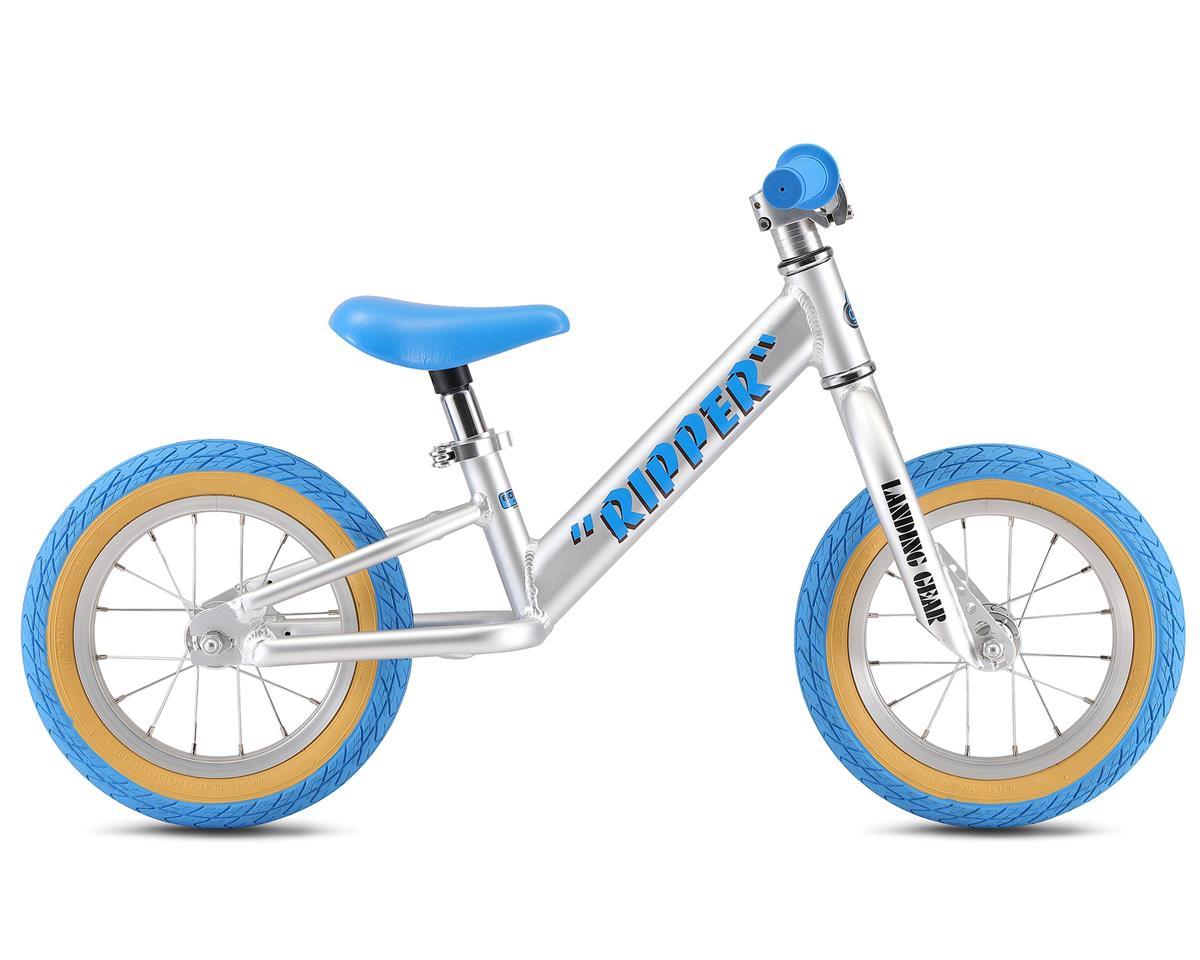
The SE Racing Micro Ripper 12 is worth comparing for a child drawn to pump tracks and BMX-race style. Do not assume a race-oriented bike is the best first pedal bike; check the current fit chart, brake type, and complete weight before ordering.
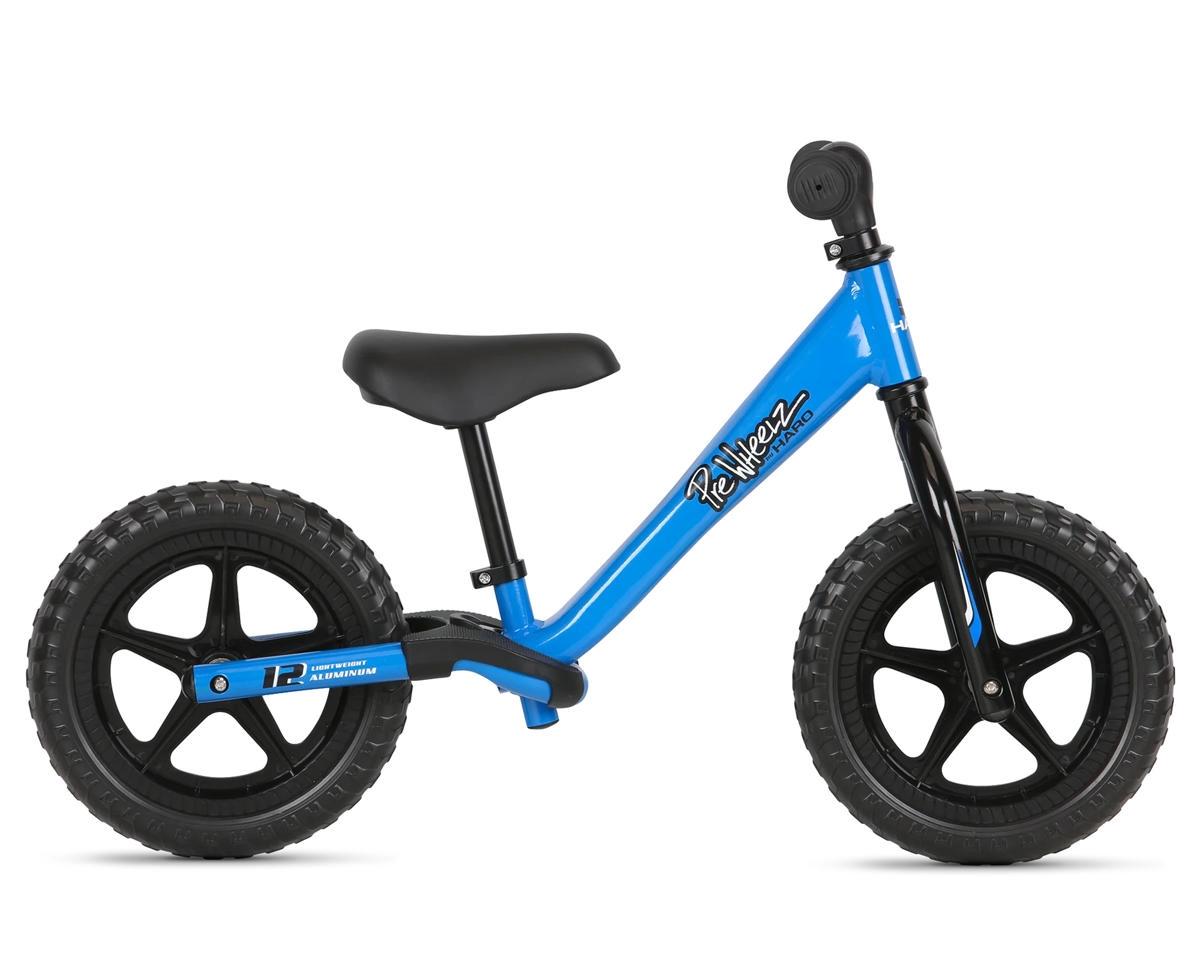
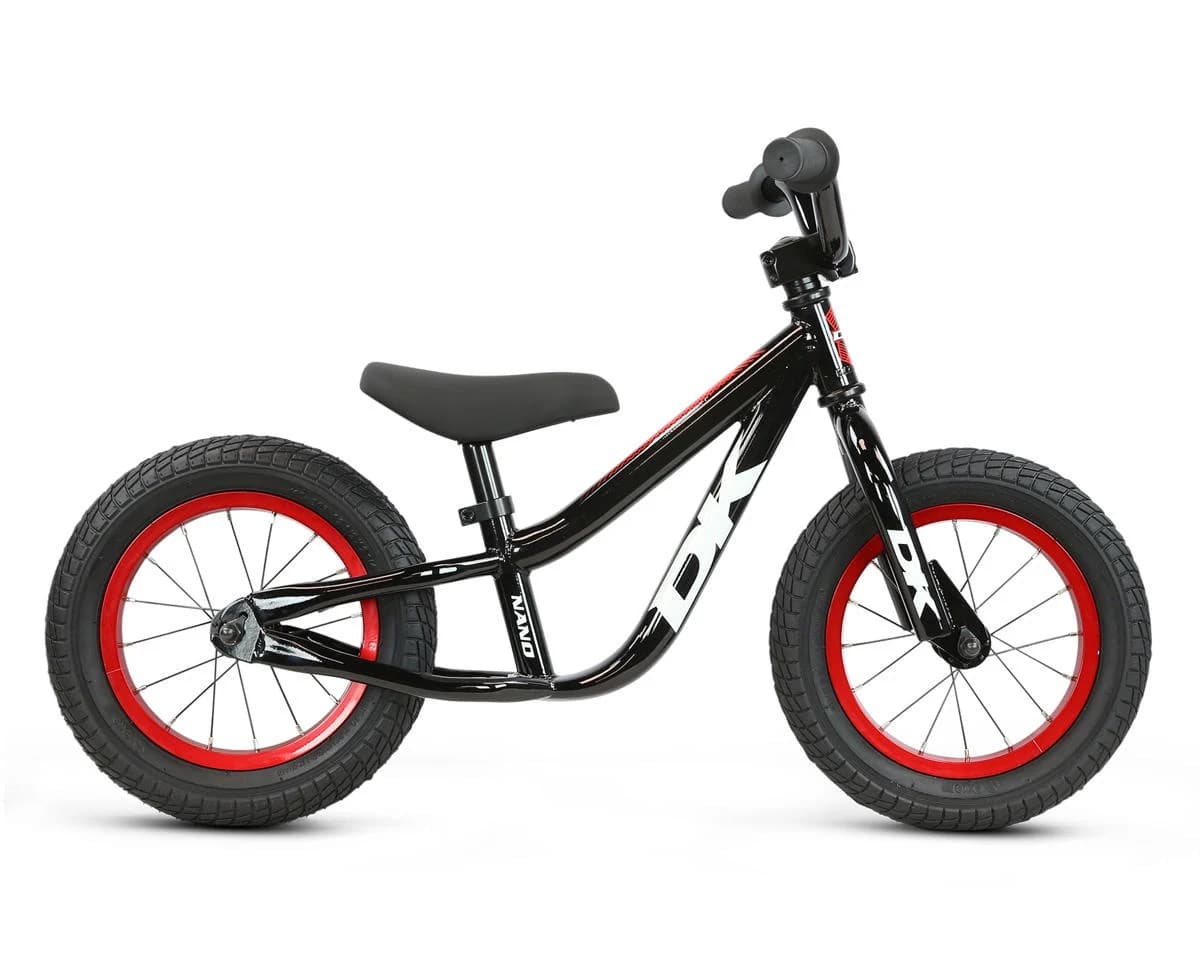
The Haro PreWheelz 12 and DK Nano are balance-bike alternatives in the same wheel-size conversation. They are for a child who still needs to learn steering, gliding, foot dabs, and stopping before adding cranks. A balance bike is not a downgrade. If the rider walks the bike more than they coast it, pedals may add frustration rather than progress.
Compare the tradeoffs
| Priority | Better starting direction | Why | Watch for |
|---|---|---|---|
| Lowest practical weight | Cult Juvenile 12 | Easier to lift and correct | Hand-brake reach and current stock |
| Simple stopping | Kink Roaster 12 | Coaster brake and compact geometry | Heavier complete and back-pedal learning |
| Pump-track or race interest | SE Micro Ripper 12 | Race-style intent | Fit chart and brake setup |
| Not ready for pedals | Haro PreWheelz or DK Nano | Builds balance first | Confirm seat height and foot contact |
These are use-case comparisons, not laboratory rankings. A child who is confident on a heavier bike may progress faster than a smaller child on a lighter bike that does not fit.
Inspection before the first ride
For any new or used 12-inch BMX, check that the bars, stem, cranks, pedals, wheels, and seat are tight and that the tires are inflated to the manufacturer's range. Squeeze the brake or test the coaster brake at walking speed. Confirm that the wheels spin without obvious rubbing and that the chain is correctly tensioned. A shop should handle uncertain assembly, damaged parts, or any fork, frame, or brake concern.
Do not use a product photo as proof that a bike is currently available or that its components match the photo. Product pages change. Record the model, size, and published specification you used, then recheck the listing at purchase time.
Questions parents should answer before buying
Ask the rider to demonstrate the skills the bike is meant to support. Can they coast in a straight line, turn without looking at the front tire, and stop on command? If the answer is no, a balance bike or a short practice period may be more useful than a higher-spec pedal BMX. If the rider can already start, steer, and stop, compare the actual reach and weight of the complete bikes rather than choosing by age alone.
Think about where the bike will live. A child who rides mostly on a smooth driveway may value easy braking and a low seat. A rider who visits a pump track may benefit from a tire and wheel package that tolerates repeated rolling and from a geometry that does not feel cramped. Neither use justifies skipping a helmet, a pre-ride bolt check, or adult supervision around traffic and drop-offs.
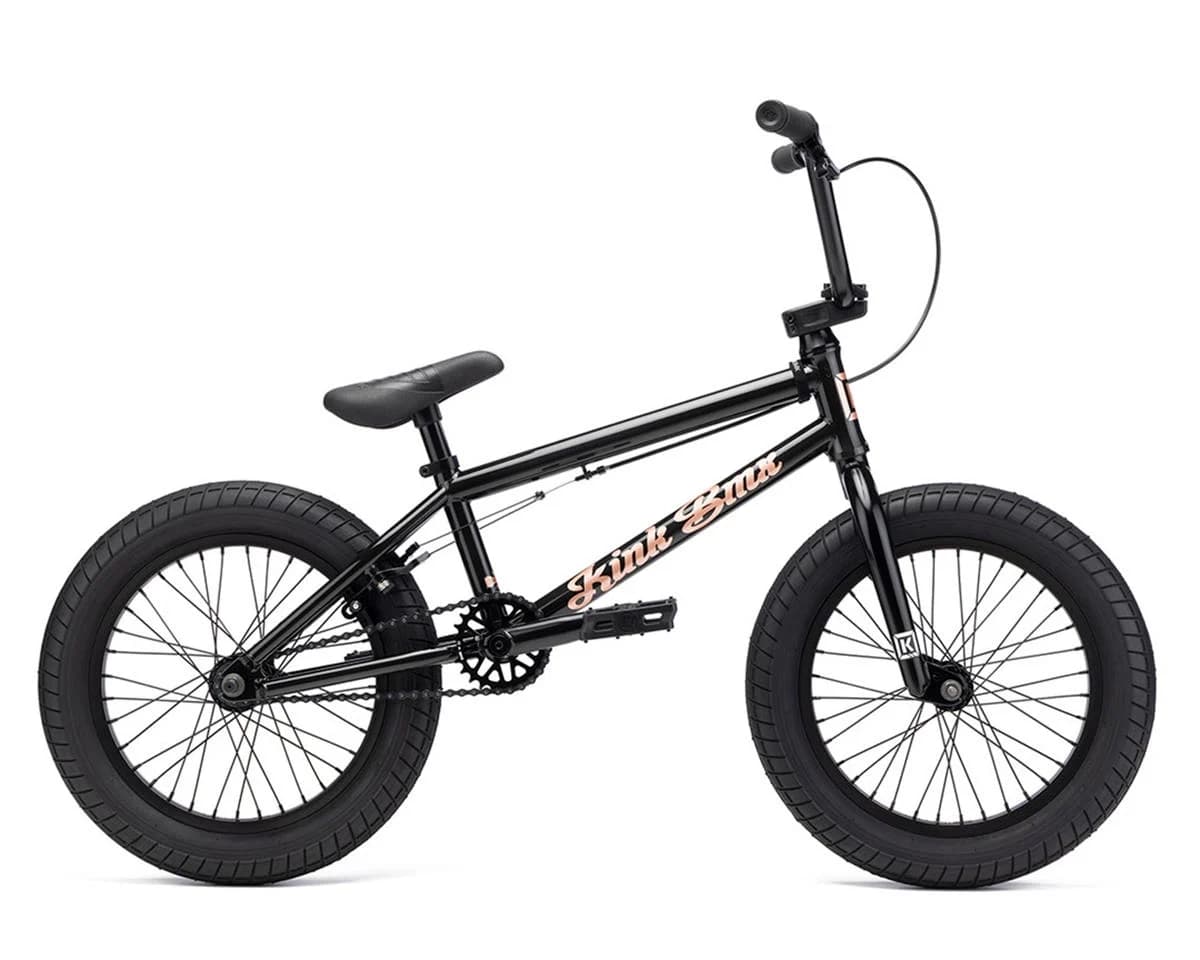
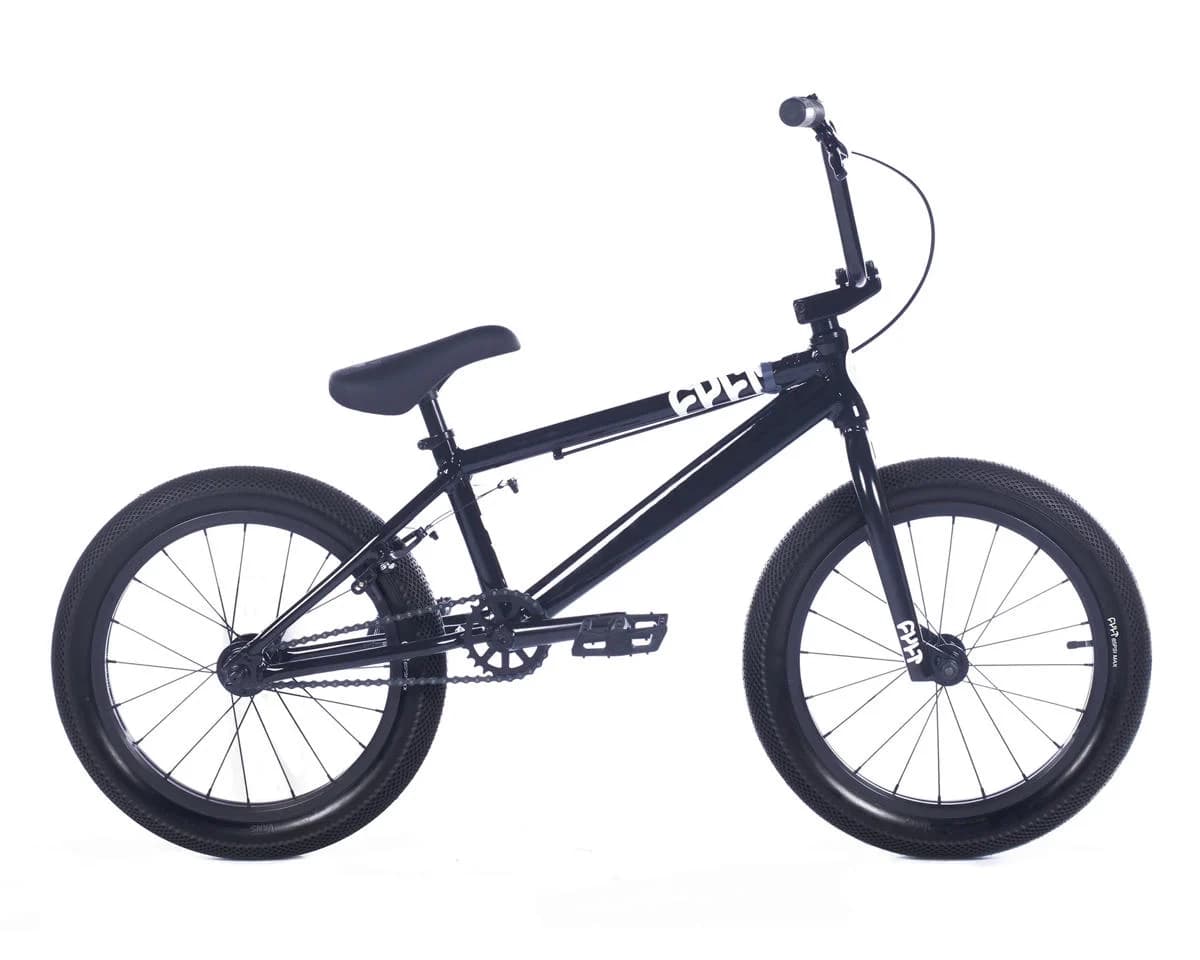
The product images in this guide show model references, not a guarantee of current color, availability, or exact component revision. Confirm the live manufacturer page and have a shop correct any assembly issue before the first real session.
Final recommendation
Choose the Cult Juvenile 12 when low weight and a BMX-shaped pedal experience matter most and the hand brake fits the rider. Choose the Kink Roaster 12 when a coaster brake and simple first-bike setup are the better match. Choose a balance bike when the child is still learning to glide. Fit, braking, and control matter more than a “best” badge.